
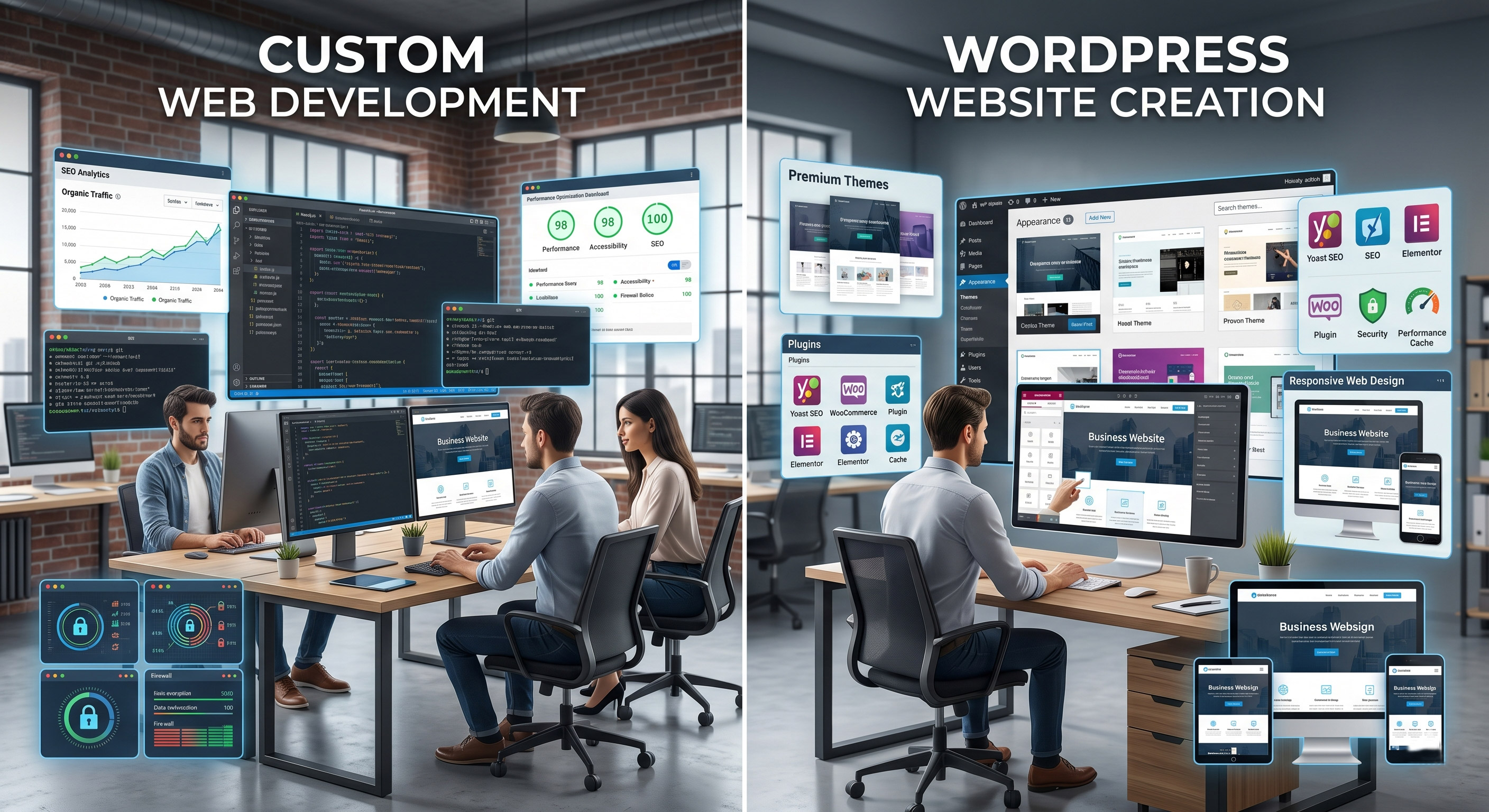
Introduction
When building a website for your business, one of the most important decisions is choosing the right development approach. Two of the most common options are Custom Web Development and WordPress Development. Both have advantages and limitations, and the right choice depends on your business goals, budget, technical requirements, and future growth plans.
Many startups and small businesses initially choose WordPress because it is affordable and easy to launch. However, growing businesses often discover that custom web development provides greater flexibility, performance, security, and scalability. Understanding the differences between these two approaches can help you make an informed investment that supports your long-term business objectives.
In this comprehensive guide, we compare custom web development and WordPress across multiple factors, including cost, flexibility, performance, security, SEO, maintenance, and scalability.
What Is WordPress?
WordPress is the world's most popular content management system (CMS), powering millions of websites globally. It allows users to create and manage websites using themes, plugins, and a user-friendly dashboard without extensive programming knowledge.
Businesses commonly use WordPress for:
- Company websites
- Blogs
- News portals
- Small business websites
- Portfolio websites
- Ecommerce stores
- Educational websites
Its popularity stems from its simplicity, large ecosystem, and extensive community support.
Advantages of WordPress
Fast Website Launch
Businesses can launch a website quickly using pre-built themes and plugins. Development timelines are typically shorter compared to custom-built solutions.
Lower Initial Cost
WordPress development generally requires less investment upfront because many features already exist through themes and plugins.
Easy Content Management
Non-technical users can update pages, publish blog posts, upload media, and manage content through an intuitive administration panel.
Large Plugin Ecosystem
Thousands of plugins provide functionality such as:
- SEO optimization
- Ecommerce integration
- Contact forms
- Security enhancements
- Membership systems
- Analytics tracking
Community Support
Because WordPress is widely used, businesses can easily find tutorials, developers, and support resources.
What Is Custom Web Development?
Custom web development involves building a website or web application from the ground up using programming languages and frameworks such as:
- HTML5
- CSS3
- JavaScript
- React.js
- Next.js
- Node.js
- Express.js
- Laravel
- Spring Boot
- MongoDB
- PostgreSQL
- MySQL
Rather than relying on pre-built templates and plugins, developers create features specifically tailored to business requirements.
Advantages of Custom Web Development
Complete Flexibility
Businesses can implement any feature, workflow, or design without being limited by existing themes or plugins.
Better Performance
Custom-built websites contain only necessary code, resulting in faster loading times and improved efficiency.
Enhanced Security
Custom applications reduce dependency on third-party plugins and minimize common vulnerabilities associated with popular CMS platforms.
Superior Scalability
Custom solutions are designed to handle growing traffic, complex integrations, and expanding business operations.
Unique Brand Identity
Every aspect of the website can be customized to reflect the company's branding and customer experience goals.
Comparing Custom Web Development and WordPress
1. Development Cost
WordPress
WordPress is generally more affordable for small projects. Businesses can purchase themes and plugins instead of building functionality from scratch.
Typical expenses include:
- Hosting
- Premium themes
- Premium plugins
- Maintenance
- Developer customization
Custom Development
Custom development requires a larger initial investment because developers build unique functionality specifically for your business.
Costs typically include:
- UI/UX design
- Frontend development
- Backend development
- Database architecture
- Testing
- Deployment
Winner
For businesses with limited budgets, WordPress often offers lower upfront costs.
For businesses planning long-term growth, custom development frequently delivers better return on investment.
2. Design Flexibility
WordPress
Although themes provide many design options, customization can become challenging when businesses require unique layouts or advanced functionality.
Developers often need to modify theme structures extensively to meet specific requirements.
Custom Development
Custom websites provide unlimited design possibilities. Every page, interaction, and user experience element can be created specifically for your brand.
Winner
Custom web development offers significantly greater design flexibility.
3. Website Performance
WordPress
Many WordPress websites rely on multiple plugins and large themes, which can increase page load times and affect performance.
Improper plugin management often causes:
- Slow loading speeds
- Increased server requests
- Larger page sizes
Custom Development
Custom applications contain optimized code designed specifically for project requirements.
Frameworks such as Next.js offer:
- Server-side rendering
- Static generation
- Advanced caching
- Faster loading speeds
Winner
Custom web development generally provides superior performance.
4. Security
WordPress
Due to its popularity, WordPress is a common target for cyberattacks. Security risks often arise from:
- Outdated plugins
- Vulnerable themes
- Weak passwords
- Poor hosting environments
Regular updates and security monitoring are essential.
Custom Development
Custom-built applications provide greater control over security architecture and reduce reliance on third-party plugins.
Developers can implement:
- Custom authentication
- Role-based access control
- Advanced encryption
- API security measures
Winner
Custom web development offers stronger security when implemented properly.
5. Scalability
WordPress
WordPress performs well for small and medium-sized websites. However, highly complex applications may eventually face limitations.
Examples include:
- SaaS platforms
- Enterprise systems
- Large marketplaces
- Advanced business portals
Custom Development
Custom architecture can scale according to business growth without being constrained by CMS limitations.
Winner
Custom web development is the clear choice for scalability.
6. Search Engine Optimization (SEO)
WordPress
WordPress provides excellent SEO capabilities through plugins such as SEO management tools and content optimization features.
Advantages include:
- Custom meta tags
- XML sitemaps
- Content management
- URL optimization
Custom Development
Developers can implement advanced technical SEO strategies directly within the application architecture.
Benefits include:
- Faster loading speeds
- Better Core Web Vitals
- Optimized structured data
- Advanced indexing controls
Winner
Both options can achieve excellent SEO results, but custom development offers greater technical optimization potential.
7. Maintenance Requirements
WordPress
Regular maintenance includes:
- Plugin updates
- Theme updates
- Security patches
- Backup management
Failure to update components may create security vulnerabilities.
Custom Development
Maintenance focuses on:
- Framework updates
- Security monitoring
- Performance optimization
- Infrastructure management
Although maintenance remains necessary, there are fewer third-party dependencies.
Winner
Custom solutions often require more technical expertise but may experience fewer plugin-related issues.
Which Businesses Should Choose WordPress?
WordPress is ideal for:
- Small businesses
- Personal websites
- Blogs
- Content-focused websites
- Local businesses
- Startups with limited budgets
- Marketing websites
- Portfolio websites
Businesses that primarily need content management and basic functionality often benefit from WordPress.
Which Businesses Should Choose Custom Web Development?
Custom development is ideal for:
- SaaS companies
- Technology startups
- Ecommerce platforms
- Enterprise organizations
- Educational platforms
- Healthcare systems
- Booking platforms
- Financial applications
- Membership platforms
- Businesses requiring unique workflows
Organizations with specialized requirements typically achieve better results through custom solutions.
The Hybrid Approach
Many modern businesses combine both approaches. For example:
- WordPress manages content and blogs
- React.js or Next.js powers the frontend experience
- Custom APIs handle business logic
This hybrid strategy combines WordPress's content management strengths with the performance benefits of modern web technologies.
Conclusion
Choosing between custom web development and WordPress depends on your business objectives, budget, and future plans.
WordPress remains an excellent solution for businesses seeking a cost-effective, content-focused website with quick deployment. It offers ease of use, extensive plugin support, and strong community resources.
However, businesses prioritizing scalability, security, performance, customization, and long-term growth often benefit more from custom web development. Modern frameworks such as React.js, Next.js, and Node.js enable organizations to build highly optimized digital experiences tailored to their specific needs.
Before making a decision, evaluate your current requirements as well as your long-term business goals. Investing in the right platform today can save substantial time, resources, and development costs in the future while creating a stronger foundation for sustainable digital growth.